The Rise of the Orthopreneur

Why orthodontists are building their own aligner brands, and what it means for the next decade of dentistry.
Something is shifting in orthodontics, quietly and quickly. The clinicians who used to be the largest customers of established aligner brands are starting to become brands themselves. Not as a side project. Not as a vanity move. As a strategic decision about where the value in their work actually lives.
We are calling this the rise of the orthopreneur.
An orthopreneur is an orthodontist, or a small group of orthodontists, who combine clinical credibility, an engaged patient and peer community, and accessible private label manufacturing to launch their own aligner brand. They are not new clinicians chasing a trend. Many of them are the most established names in the profession. Top-tier providers for the largest aligner manufacturers. Senior key opinion leaders and conference speakers. Mentors who, for years, helped grow the brands they were paid to represent.
Now they are putting that same energy into their own.
The data is no longer subtle
In 2026, more than 35% of K Line's incoming inquiries are coming from individual orthodontists or small ortho-led groups asking the same question: how do we launch our own aligner brand?

That is a meaningful number for a company that has historically served labs, distributors, and larger dental groups. The orthodontist-as-brand-builder is no longer a niche segment. It is one of the fastest-growing customer segments in the private-label aligner space.
The reasons are structural, not sentimental.
Aligner therapy has become a mature treatment modality. The clinical workflows are well understood, the materials are standardized, and the manufacturing infrastructure exists to produce high-quality aligners at scale without requiring the clinician to invest in equipment, technicians, or factories. What used to be impossible for an individual practitioner is now operationally simple.
At the same time, the economics of being a top-tier provider for someone else's brand have flattened. Clinicians watch their case volume drive someone else's stock price, while their own practice equity stays tied to a logo they do not own. The math of building your own brand, once you have the patient base and the clinical reputation, increasingly favors going independent.
Dermatology has already lived this story
The orthopreneur movement is not unique to dentistry. It is the same pattern that reshaped dermatology a decade ago, and aesthetics before that.
Dr. Sandra Lee built SLMD Skincare into a national brand on the back of her clinical reputation. Dr. Dennis Gross turned his Alpha Beta Peel into a global skincare line carried by every major retailer. Dr. Howard Murad started in 1989 with a clinical product line and never looked back. None of these clinicians stopped practicing. They built brands that carried their philosophies and reached patients who would never sit in their chairs.
The shift was so significant that a 2017 study published in the National Library of Medicine found that 19.2% of all licensed physicians had founded at least one company. Among surgeons, the number was even higher. Clinician entrepreneurship is not a fringe behavior. It is a structural feature of modern healthcare.
Orthodontics is now entering the same phase.
What the orthopreneurs are actually building
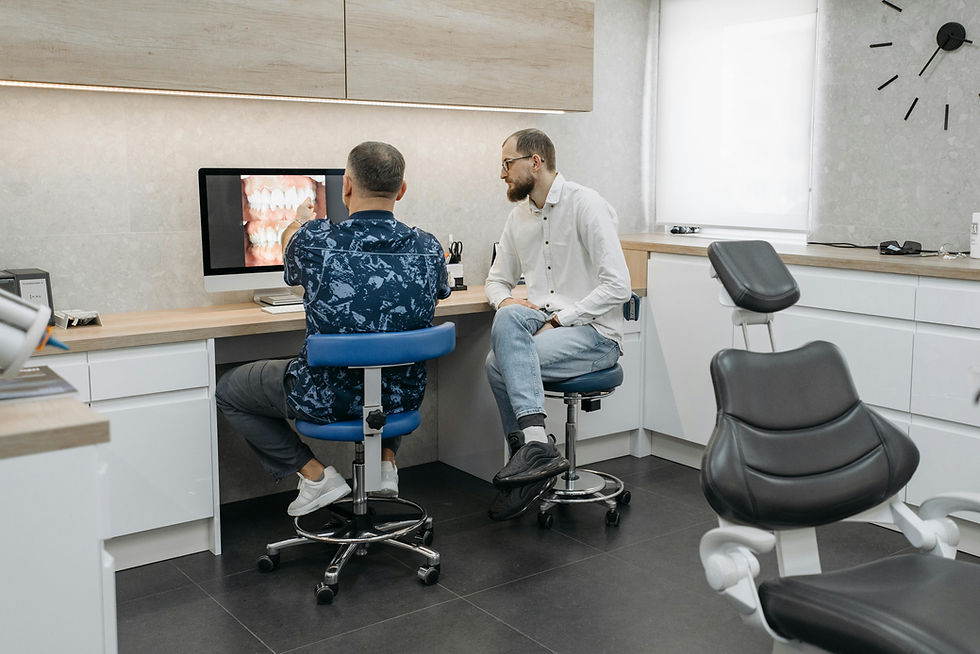
The orthopreneur is not building a generic aligner brand. They are building a clinical product that reflects their philosophy.
Consider NEXO, the aligner system co-created by Domingo Martin and Alberto Canábez Berthet. Two senior orthodontists, both established in their own right, who looked at the aligners available on the market and decided none of them reflected the way they actually wanted to treat patients. They built NEXO not as a manufacturer's ambition but as a clinical one. The system carries their thinking, not a corporate logo.
That is the orthopreneur pattern. The brand is an extension of the clinician's worldview. The aligner is the artifact through which that worldview reaches patients.
This matters commercially, but it matters more clinically. When the clinician designs the brand, protocols, patient experience, and relationship with the manufacturer, the entire treatment becomes more coherent. The orthopreneur is not outsourcing their judgment to a multinational. They are insourcing it back into their own name.
The manufacturing question
The reason this trend can scale now, and could not scale ten years ago, is manufacturing access.
A decade ago, building your own aligner brand meant buying a 3D printer, hiring technicians, navigating regulatory clearance across multiple jurisdictions independently, and absorbing the operational risk of a small manufacturing operation alongside running a practice. Almost no clinician was willing to take that on.
Today, the model has inverted. Established private label manufacturers handle production, regulatory compliance, packaging, and shipping at scale, while the orthopreneur focuses on what only they can do: clinical philosophy, brand identity, and patient relationships.
K Line produces 25,000 aligners per day for more than 150 brands across 40 countries. A significant portion of those brands are orthopreneur projects in various stages of growth, from single-practice launches to multi-clinic expansions to national brand ambitions. The infrastructure exists. The orthopreneur supplies the vision.

What this means for the next decade
The orthopreneur movement is still early. Most orthodontists have not yet considered the option, and many of those who have are still in the exploration phase. But the trajectory is clear.
Three forces are converging. Mature aligner therapy. Accessible manufacturing. A generation of clinicians who watched dermatology, aesthetics, and even general dentistry produce clinician-led brands worth hundreds of millions, and who are no longer willing to sit on the sidelines of their own market.
The orthodontists who move first will define what the category looks like. They will set the design language, clinical standards, patient experience norms, and operational benchmarks that everyone after them benchmarks against.
A decade from now, the question will not be whether orthodontists build their own brands. It will be why anyone ever expected them not to.
This is the rise of the orthopreneur.
Ready to build your own aligner brand?
K Line works with orthodontists who are ready to put their clinical thinking into a brand they own. We handle manufacturing, compliance, packaging, and logistics. You bring the philosophy and the patients. We focus on:
✔ Custom aligner design built around your clinical protocol, not a generic template
✔ Manufacturing precision at 25,000 aligners per day across 40 countries
✔ Direct clinical responsiveness: your team talks to ours, not a ticketing system
If you’re exploring what it would take to launch under your own name, we can walk through it together.

Comments