The best aligner brands of the next decade won't own a factory
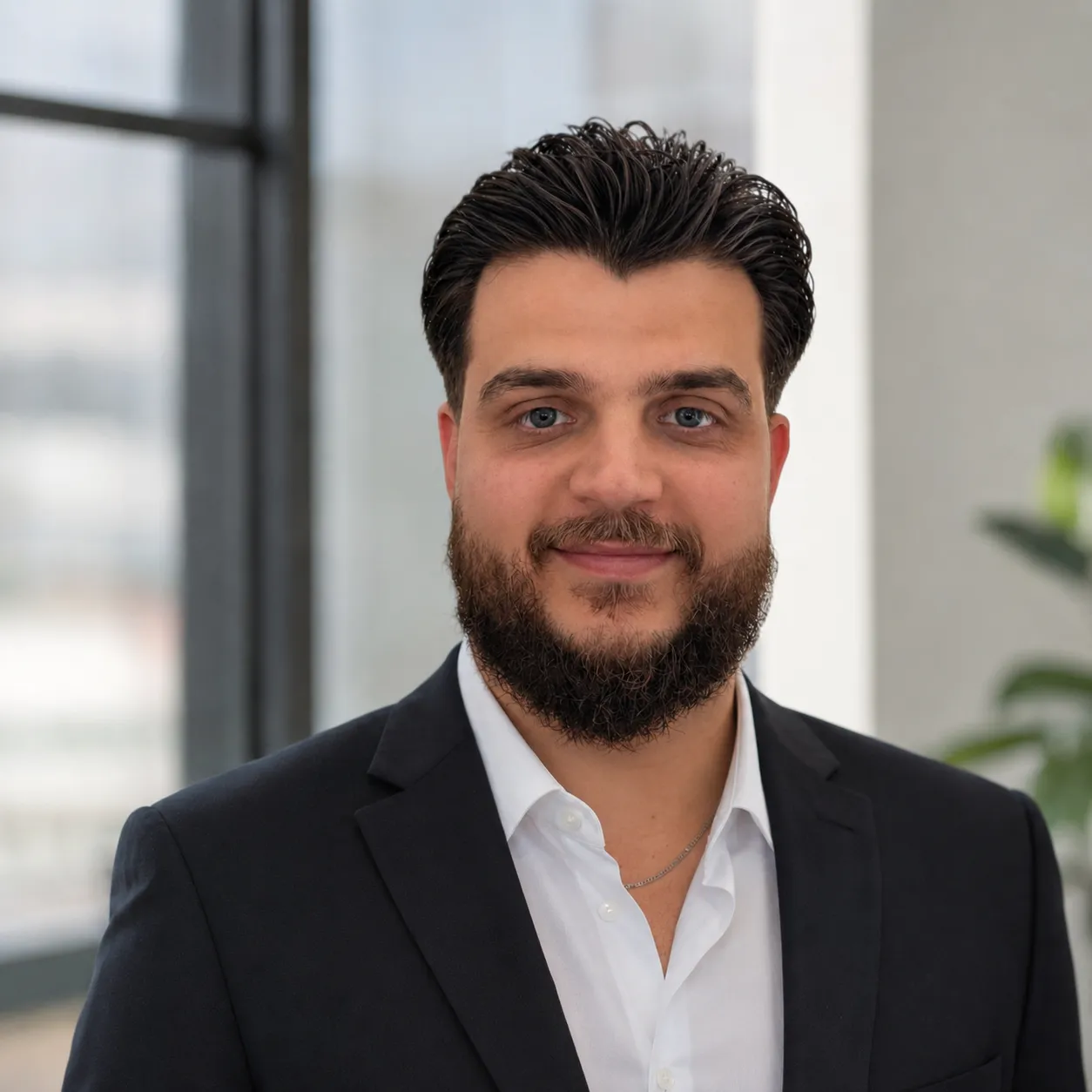
Egzen Aljilji, Chief Customer Officer at K Line Europe, has helped hundreds of aligner brands launch and grow. Here he explains why the real competitive moat in clear aligners is patient experience, not manufacturing.
Quick answer: The clear aligner market is growing fast enough that owning production feels like the safe bet. It isn't. The brands pulling ahead today compete on patient experience, brand equity, and clinical outcomes, and they partner for manufacturing. Building a factory ties up your capital and attention in the one part of the value chain that has quietly become a commodity.
KEY TAKEAWAYS
Industry analysts expect the global clear aligner market to roughly triple this decade. The growth is structural, not a fad.
Manufacturing has become the commodity layer. The scarce, defensible assets are brand, patient relationship, and experience.
The collapse of the largest direct to consumer aligner brand proved that production scale means nothing without trust and clinical care.
Private label lets a clinic or DSO launch in weeks, keep its brand and margin, and scale without ever building infrastructure.
Why is everyone suddenly building their own aligner brand?
Because the math finally works, and the market is too big to keep reselling someone else's name.
The numbers are hard to ignore. Industry analysts put the global clear aligner market at around $5.5 billion in 2025, on a path toward roughly $18 billion by 2033. That is close to 15% growth every single year. In Europe, the curve is even steeper, near 20% annually, and Germany is the largest market on the continent. Adults now make up about two thirds of all cases. This isn't a trend cycle that fades next season. It is a long, structural demand curve.

When I started in this industry in 2019, "launch your own aligner brand" was a sentence reserved for the largest groups with the deepest pockets. That barrier is gone. In the years since, I have helped hundreds of brands make exactly that move, from single clinics to fast-growing groups, and I have watched closely which ones take off and which ones stall. The clinics, DSOs, and orthopreneurs moving fastest have realized something simple. If you are going to do the clinical work anyway, why hand the brand, the margin, and the patient relationship to a company whose logo your patient will remember instead of yours?
"When I started in this industry in 2019, your own aligner brand was a line reserved for the biggest groups. Today a small clinic can launch one before the quarter closes." - Egzen Aljilji, Chief Customer Officer, K Line Europe
So why not just build the factory too?
Because the factory is the most expensive way to buy the least differentiated part of your business.
This is where I watch smart operators talk themselves into a costly mistake. If the market is booming, the instinct says own everything. Build the lab, buy the printers, hire the technicians, control the line.
Then the real numbers arrive. Equipment alone runs from roughly $80,000 to $250,000 before you have bought a gram of material, and that is the easy part. Behind it sits treatment planning software, a validated material supply, trained technicians, a quality management system that satisfies regulators, and the logistics to ship a medical device reliably. Breakeven requires a case volume most practices won't reach for years. And every euro and every hour poured into that production line is pulled away from the only things that actually grow a brand: acquiring patients, delivering clinical excellence, and building a name people trust.
Manufacturing an aligner in 2026 is a solved problem. It is not where your advantage lives.
If not the factory, then where is the moat?
In the experience your patient remembers, the one thing a competitor can't buy off the shelf.
Look at how the market actually delivers treatment. Roughly 86% of aligner therapy still happens through a dental practice, not online. Patients are voting, with their time and their money, for doctor directed care. The supervision, the reassurance, the human in the chair, that is the product. The tray is just the tool.
We already ran the alternative experiment at industrial scale. The largest direct to consumer, mail order aligner brand in the world had enormous manufacturing capacity and a marketing budget most of us can only imagine. It filed for bankruptcy in 2023 and left patients stranded mid-treatment. Production scale didn't save it. What it never owned was trust, and trust is built in the operatory, not on the line.
The most valuable thing in an aligner case isn't the polymer. It is the patient who trusts your name enough to send you three friends.

What does a private-label partnership actually give you?
Everything behind the scenes, so your name is the only one the patient ever sees.
A real private-label ecosystem is far more than trays in a branded box. Done properly, it hands you the entire operational backbone: a comprehensive case management platform, orthodontist-led treatment planning with protocols you can customize, premium aligners manufactured to your specification, fully branded patient packaging, workflows tailored to your clinical philosophy, and manufacturing that scales globally as your volume climbs. This is not a rebranded stock tray. It is a solution built around your practice.
The result inverts the old equation. You launch in weeks instead of years. Your patients experience your brand from start to finish. You keep clinical control and you keep the margin. And when your case count doubles, your partner absorbs the load, with no new building, no new hires, and no operational headache.
What should clinics and DSOs do about it now?
Stop thinking like a manufacturer. Start thinking like a brand.
Three questions are worth sitting with this quarter.
First, where does your patients' loyalty actually live, with you or with the logo on the aligner?
Second, if you costed out building production versus partnering for it, how many years until the factory pays for itself, and what growth did you forgo in the meantime?
Third, does your supplier give you clinical expertise, branding, and scale, or just trays?
The answers usually point the same direction.
The bottom line
The winners of the next decade won't be the practices with the biggest factories. They will be the ones with the best patient experience and their own name on the box. That isn't a manufacturing strategy. It is a brand strategy. And for the first time, it is within reach for a practice of almost any size.
I have watched this play out across the brands we have helped build. The startups that break through are the ones that pour their energy into patient experience and let a partner carry the rest. Making those brands more successful, not just supplying them, is the whole point.
Frequently asked questions (FAQ)
Is private label the same as reselling another brand?
No. Reselling puts someone else's brand in front of your patient. Private label puts yours: your name, packaging, and experience, from start to finish, built to your specification.
How quickly can a new brand actually launch?
Weeks, not years. The infrastructure already exists. You are plugging into it, not building it.
Do I give up clinical control?
No. Treatment planning is orthodontist-led but follows your protocols. The clinical decisions remain yours.
Is private-label quality lower than the big brands?
It depends entirely on the partner. A serious manufacturer produces to your specification under a proper quality management system, the same standards the established brands rely on. Vet this carefully.
Does this only work for large DSOs?
No. The model scales down to a single clinic and up to a multi-site group. The economics work at both ends.
What about patients who ask for a name brand aligner?
Patients trust their doctor first. When the treatment is doctor directed and the experience is excellent, the brand they remember is yours.
Build the brand. Let us carry the rest.
If your patients already trust your name, that is the asset worth protecting. We handle the treatment planning, the aligners, and the packaging behind the scenes, so the only brand your patient ever sees is yours. We focus on:
✔ Aligners built to your specification, with packaging that carries your brand from the first tray to the last.
✔ Orthodontist led treatment planning that follows your protocols, so clinical control stays with you.
✔ Capacity that scales as your case count climbs, without you adding a building or a single hire.
Talk to us about what a fully branded, private-label program could look like for your practice or group.
Schedule a call or talk to us via WhatsApp.


Comments