Scaling Aligner Manufacturing: The Factory Was Never the Hard Part
Two companies buy the same machines. Only one of them can grow. Here is what separates them.
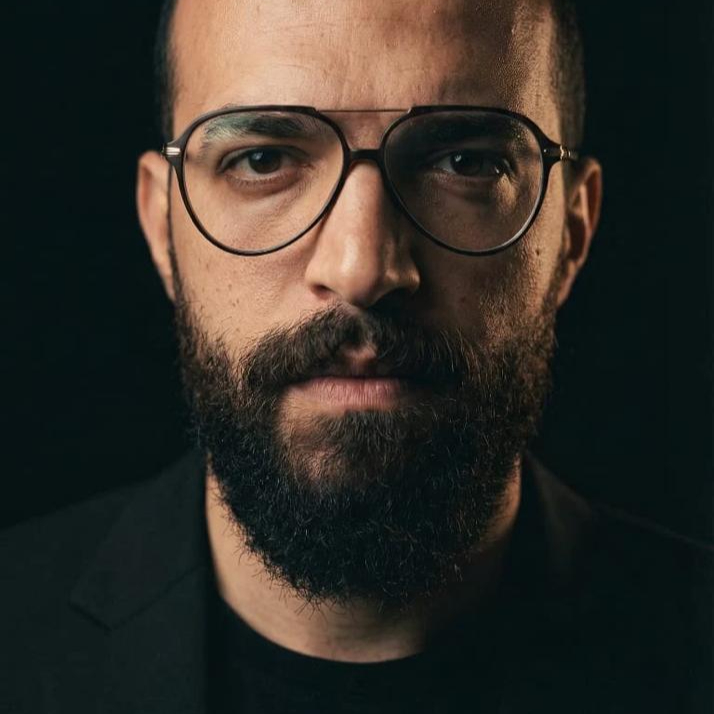
By Dr. Assem Youssef
CEO, K Line Middle East | General Manager of the Cairo Free Zone Production Facility.
Picture two aligner companies. Same machines, same software, same material, same market.
One doubles its volume and the quality holds. The other doubles and things start going wrong that nobody can quite explain.
What does the first company have that the second does not?
It is not equipment. Equipment can be bought. Nor software, material, or money. None of it is trivial, and a new site carries real regulatory weight, but all of it is available to anyone with capital and patience.
I trained as a dentist and then spent my career on the manufacturing side of this business, so this may sound odd coming from me. The factory was never the hard part.
What actually runs out
Aligner companies are described as technology businesses. Technology grows in a particular way: once the product exists, the next copy costs almost nothing.
We do not work like that. Every case needs real material, real handling, and a real human decision. Somebody has to read the prescription and work out what the dentist actually wants, how fast the teeth should move, and whether the plan makes sense for this patient.
Machines are the easy bit. You order one, it arrives, you plug it in. People are not.
Building someone you can trust with a difficult case takes a long time, and that time does not shrink because the company is in a hurry. So watch what happens when volume grows faster than people do. Cases wait longer. Harder cases go to people not quite ready for them. Quietly, what counts as good enough slips, and nobody makes that decision out loud.
“Growth in this business does not fail loudly. It decays.”

Three ways to grow
Every company reaches for one of these. All three work, and each costs something.
Hire more people. Honest and slow. Quality wavers while each new group learns, and hiring always runs ahead of training.
Bring in automation. Strong on anything with one right answer. It does not touch judgement, and a neat output gets read less carefully than a messy one.
Make each case need less thinking. The strongest of the three and the least discussed. The price is turning some work away, on purpose.

Where the leverage really sits
Most companies try the first two and avoid the third, because the third means saying no to work already in the building.
But think about what makes a case hard. Usually it is not the teeth. Rotating a round-rooted premolar or extruding a lateral is demanding, but everyone knows it going in, so those cases get the attention they need.
What costs you is ambiguity. A scan with gaps. A prescription that could mean two things. A situation nobody has agreed on how to handle. Each one stops a person and makes them start from the beginning.
A case that arrives clean does not use less material. It uses far less of the thing you are short of. So the way to grow here is not a bigger factory. It is to make each case easier before it ever reaches one.
Why we are built this way
That is the reasoning behind our operation in Cairo. We did not build a plant that also handles cases. We built a place where cases are received, understood, and decided, which also manufactures.
Sitting there brings something else. Cases reach us from many brands and markets at once, so we see patterns no single brand can see from inside its own numbers. A scanner setting. A habit in how a prescription is written. One case type behaving differently than everybody assumed. To each brand alone, it looks like bad luck. From here it is a pattern, and a pattern can be fixed.
Manufacturing itself is becoming infrastructure, the way electricity is. Valuable, worth owning, and no reason on its own to choose a partner.
There is a fair objection to all of this. A brand partner does not want to hear about our internal decision-making. They want the result without the backend, and they are right to want it. That is precisely what they are paying an OEM for.
So the point is not to hand our complexity back to the client. It is the opposite. The judgement has to happen somewhere, and our job is that it happens here rather than landing on their desk as homework. Where we genuinely need something from them, a cleaner scan or a clearer prescription, it should be one specific ask and not a lecture about process.
Back to the two companies
The difference between them was never on the factory floor. It was how much thinking each case demanded by the time it got there.
If the limit here were capital, the game would already be over. The largest balance sheet would have won and the rest of us would be renting capacity from it.
It is not over. The limit is how well a group of people organise themselves around a case before anyone touches it, and that is open to anyone willing to do the work. The next stretch of this industry belongs to the operations that think most clearly, not those that spend most heavily.
“The hardest thing to copy in this business is not on the production floor. It is the judgement that reaches a case before anything is made. A client should never have to see that work. They should only ever see the result. Making it invisible is the job.” - Dr. Assem Youssef, CEO of K Line Middle East and General Manager of the Cairo Free Zone Production Facility.
Where K Line Fits
Growth in aligner manufacturing rarely fails on the production floor. It fails in the gap between a messy prescription and a clear treatment plan, and that gap is where K Line puts its people to work.
Your brand grows. We carry the judgment that keeps each case predictable.
Schedule a call or talk to us via WhatsApp.
Comments